Why BASIC works so well for software engineers
BASIC works for software engineers because the framework is not trying to invent a new kind of cognition. It is naming the sequence that strong engineers already rely on when the work matters.
Good software work usually follows a recognizable loop:
- clarify the problem
- compare realistic choices
- make the design shape visible
- build in an order that preserves correctness
- verify before you trust yourself
BASIC simply compresses that into a stable operating model.
The hidden problem is usually order, not intelligence
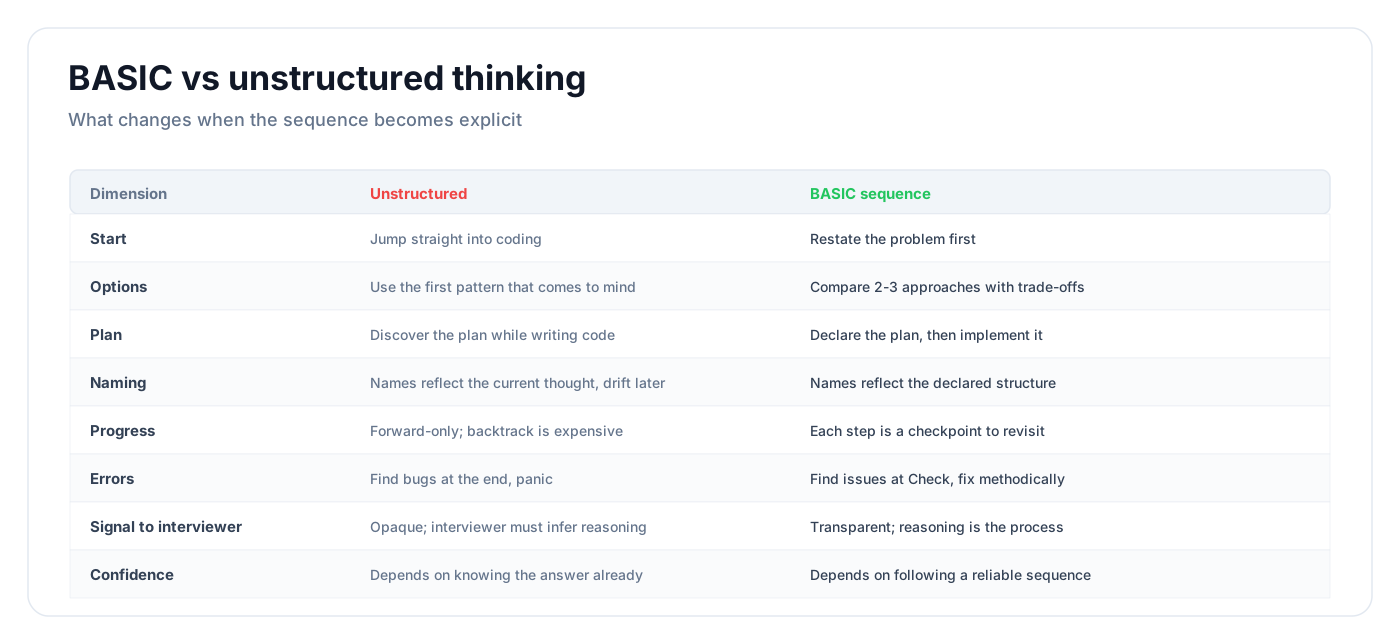
Candidates often describe technical interview failure as a knowledge gap. Sometimes that is true. But much more often the knowledge exists and the order is broken.
- They notice a likely pattern and code too early.
- They understand the trade-off but never externalize it.
- They build the happy path and forget to verify boundaries.
- They have a decent answer in private, but the interviewer sees chaos.
BASIC helps because every one of those failures maps to a specific missing phase.
- Missing Breakdown means ambiguity stays hidden.
- Missing Assess means the first idea gets mistaken for the best idea.
- Missing Structure means the reasoning is hard to follow.
- Missing Implement means the answer stays theoretical.
- Missing Check means confidence outruns reliability.
It fits how SWE interviews are actually scored
Software interviews rarely reward raw charm. They reward legible problem solving.
That means interviewers are watching for things like:
- whether you clarified the task
- whether you spotted constraints
- whether you compared more than one path
- whether the implementation follows a coherent model
- whether you test and inspect your own answer
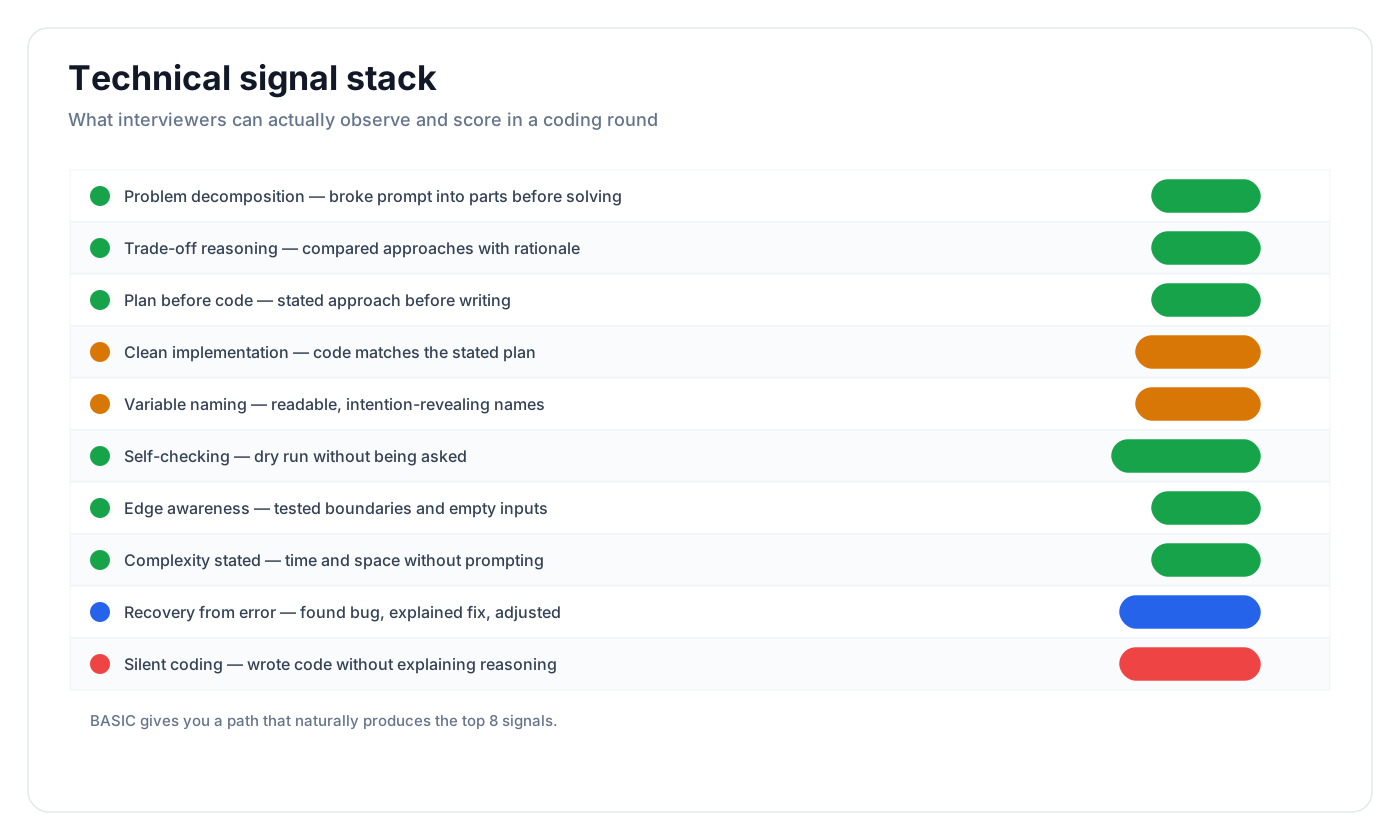
BASIC creates those signals in a clean order. It turns invisible thinking into visible judgment.
It lowers cognitive drag
A technical round mixes ambiguity, time pressure, memory pressure, and social evaluation. That is exactly the kind of environment where ordered thinking pays off.
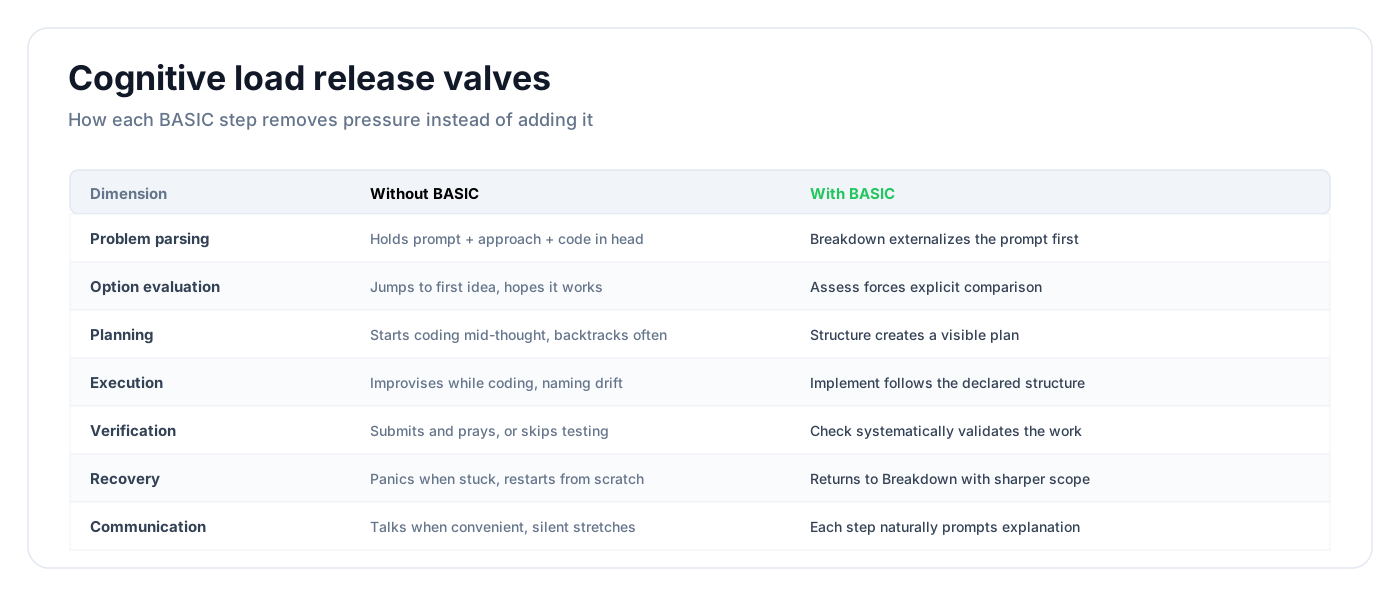
BASIC lowers drag because it narrows the active question at each step.
In Breakdown, you only need to identify the problem shape.
In Assess, you only need to compare the candidate paths.
In Structure, you only need to state the plan.
In Implement, you only need to build the plan.
In Check, you only need to verify the answer.
That separation is calming because it prevents the brain from trying to solve everything at once.
It makes quality easier to inspect
One of the biggest advantages of BASIC is that it gives you checkpoints.
Checkpoints matter because quality is easier to improve when it has named phases.
If a mock interview went badly, BASIC helps you diagnose the miss precisely:
- Did you fail to clarify requirements?
- Did you skip the baseline?
- Did you never state an invariant?
- Did your implementation drift from your plan?
- Did you stop without a dry run?
That diagnostic power is a real advantage in practice. It lets you improve the process, not just retry the question.
Why it feels especially right in 2026
In an AI-assisted environment, the most valuable engineering signal increasingly lives around the code rather than only inside the code. The hard parts are scoping, evaluation, trade-offs, oversight, debugging, and verification. BASIC is already built around those moves. That is why it still feels relevant even when AI makes first-draft implementation cheaper.
BASIC does not compete with the tools.
It tells you how to stay in charge of them.
The most useful mental model
Think of BASIC as a quality-preserving sequence.
It is not just a way to sound organized.
It is a way to reduce the odds that you do the right work in the wrong order.
That is why it works so well for software engineers.