BASIC vs STAR for technical and behavioral work
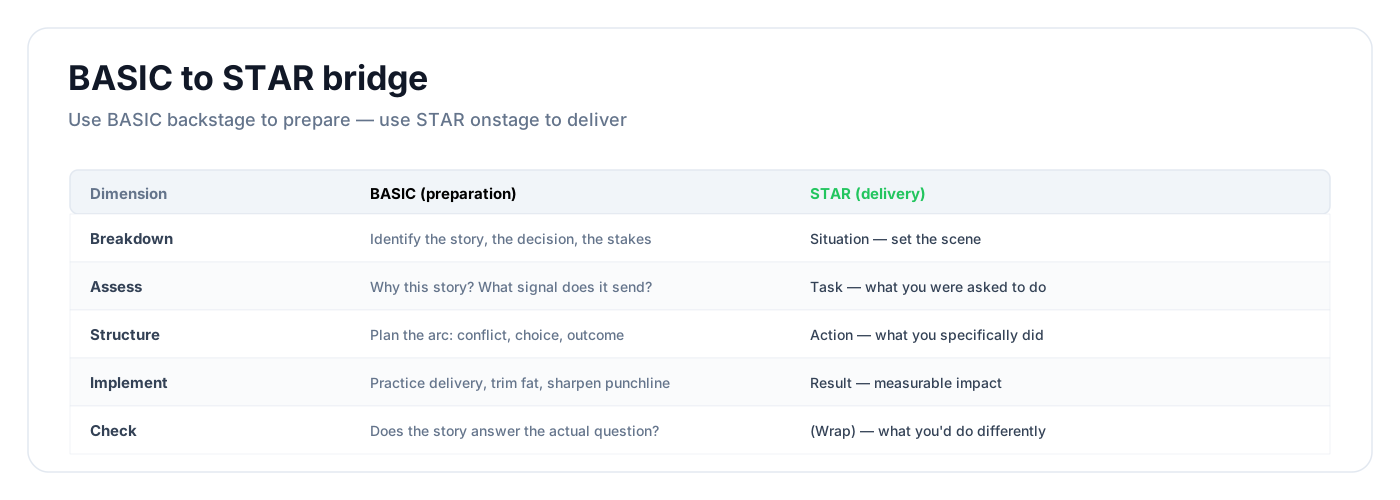
The cleanest way to compare BASIC and STAR is not to ask which one is universally better.
The right question is: which one fits the task in front of you?
STAR is still excellent for behavioral answers
STAR — Situation, Task, Action, Result — is strong when the interviewer wants a structured example from your past.
It works especially well for:
- conflict
- ownership
- leadership
- failure
- stakeholder management
- influence without authority
- prioritization
- recovery after a miss
The reason is simple: those questions want a story with context, a decision, and a result.
BASIC is stronger for live technical reasoning
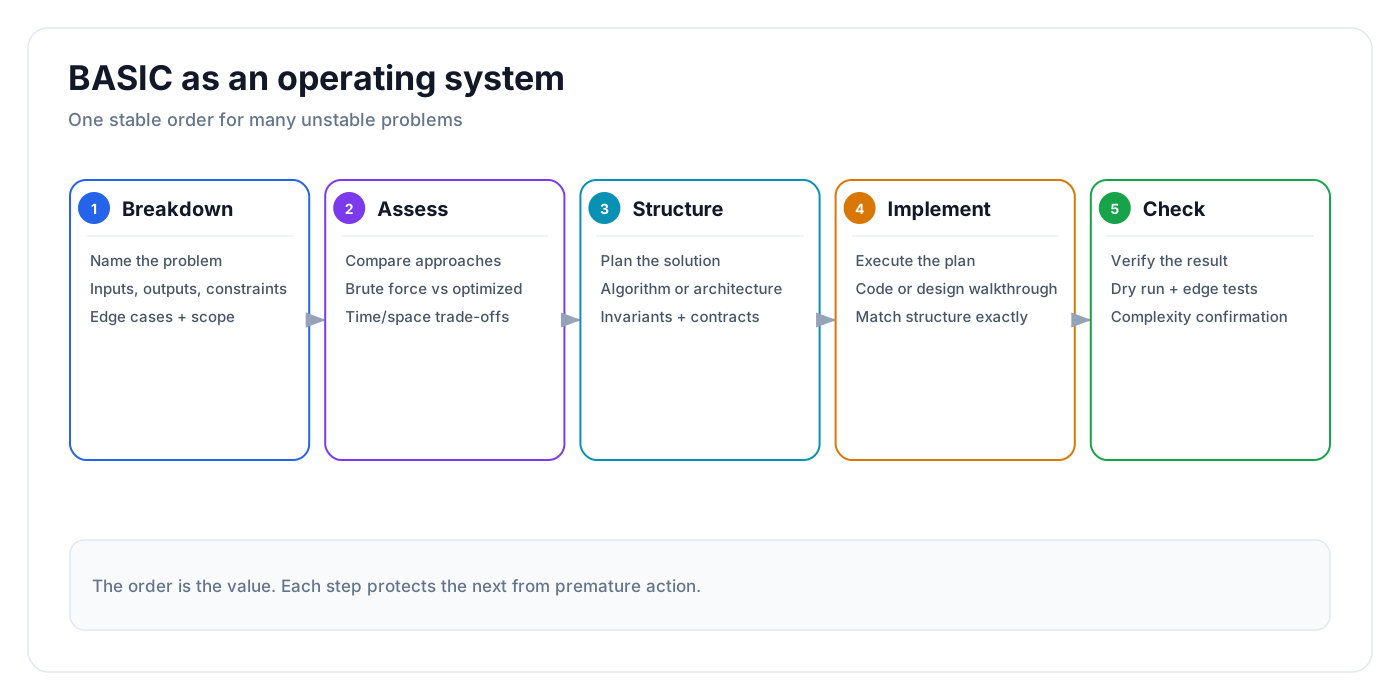
Coding, debugging, and system design are not primarily story tasks. They are live reasoning tasks.
In those rounds, the interviewer is usually scoring:
- decomposition
- evaluation
- choice quality
- implementation discipline
- verification
BASIC maps directly to those units:
- Breakdown for clarification
- Assess for comparison
- Structure for the plan
- Implement for execution
- Check for validation
That match is why BASIC tends to feel more natural in SWE use cases.
The mistake people make
The biggest mistake is trying to use one framework everywhere.
When candidates force STAR onto a coding question, they often compress too much live reasoning into “Action.”
When they force BASIC onto a classic “tell me about a time” question, they sometimes lose the narrative spine that behavioral interviewing needs.
The stronger move is to let each framework do its best work.
The best hybrid rule
Use this rule:
- STAR onstage for behavioral answers.
- BASIC onstage for technical answers.
- BASIC backstage to prepare stronger STAR stories.
That third point is underrated.
BASIC is excellent for story preparation because it helps you:
- break your experience into a story bank
- assess which story matches the question best
- structure the example before you answer
- implement the actual STAR delivery
- check whether the story has ownership, metrics, and real trade-offs
In other words, BASIC does not fight STAR. It sharpens it.
A simple translation example
Suppose the question is:
Tell me about a time you had to make a hard trade-off in a project.
A strong prep flow is:
- Breakdown: What type of trade-off is the question really asking about?
- Assess: Which of my stories best shows judgment, ownership, and measurable impact?
- Structure: What is the STAR arc?
- Implement: Deliver the answer clearly.
- Check: Did I include the hard choice, not just the happy ending?
That is BASIC improving the behavioral answer without replacing the STAR frame.
Why this matters more in AI-enabled interviewing
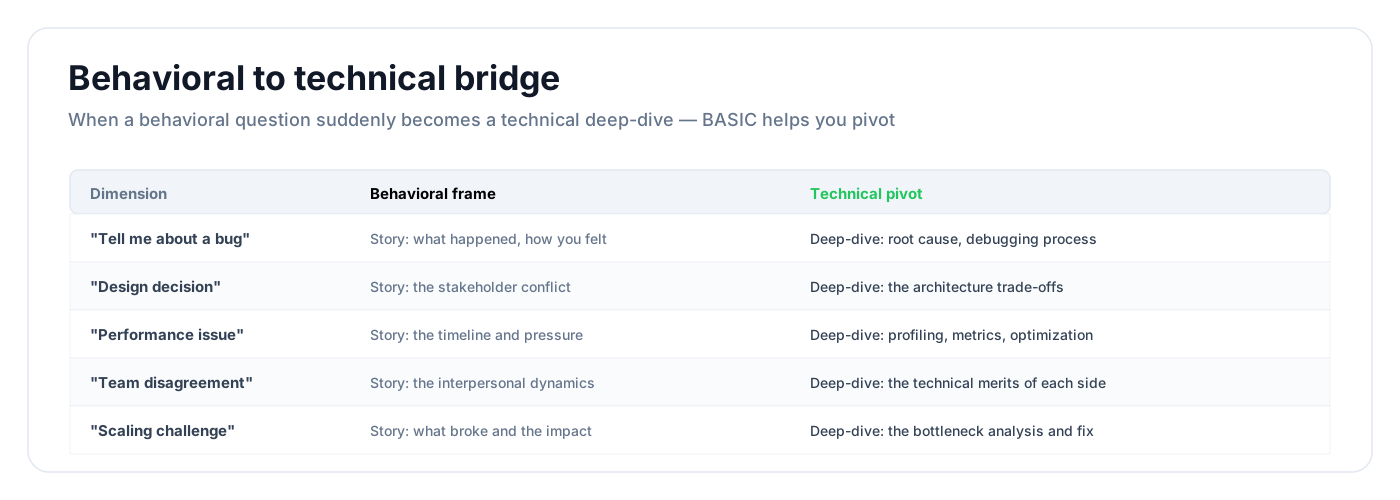
Senior interviews now move more fluidly between modes. A behavioral question often turns into a technical follow-up:
- Why did you choose that design?
- What were the scalability risks?
- What alternatives did you reject?
- How did you validate the change?
STAR gets you into the story. BASIC helps you survive the technical drill-down.
The strongest candidates can switch smoothly:
- narrative for the history
- BASIC for the reasoning inside the history
That hybrid is often what seniority actually sounds like.
The practical takeaway
Do not frame the choice as BASIC versus STAR forever.
Frame it as BASIC for live technical judgment, STAR for behavioral evidence, and BASIC backstage to make STAR sharper.
That is the useful rule.