BASIC in human + AI interviewing
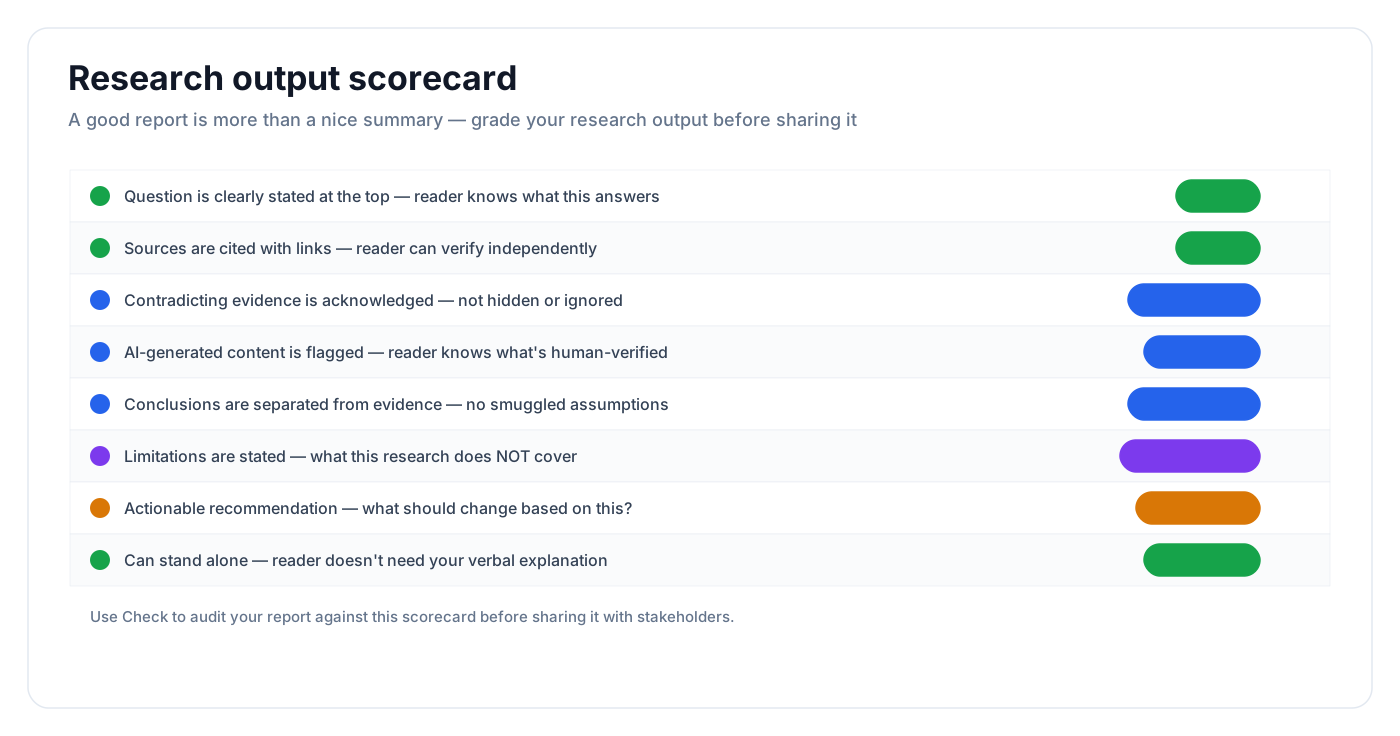
In AI-augmented technical interviewing, a working answer by itself is no longer enough signal.
If a tool can produce a first draft quickly, the real differentiator shifts toward:
- scope judgment
- prompt quality
- evaluation of outputs
- debugging and correction
- trade-off reasoning
- verification
BASIC is already built for exactly that landscape.
Why the framework becomes more relevant, not less
Some people assume AI reduces the value of structured thinking.
In practice, it often increases it.
When implementation gets cheaper, sequence errors become more dangerous:
- a candidate can commit too early because the tool is fast
- a polished answer can look more reliable than it is
- weak source evaluation gets hidden behind fluent prose
- weak debugging discipline gets hidden behind generated code
BASIC counters all of those by demanding that the process remain visible.
Breakdown and Assess are the new hard filters
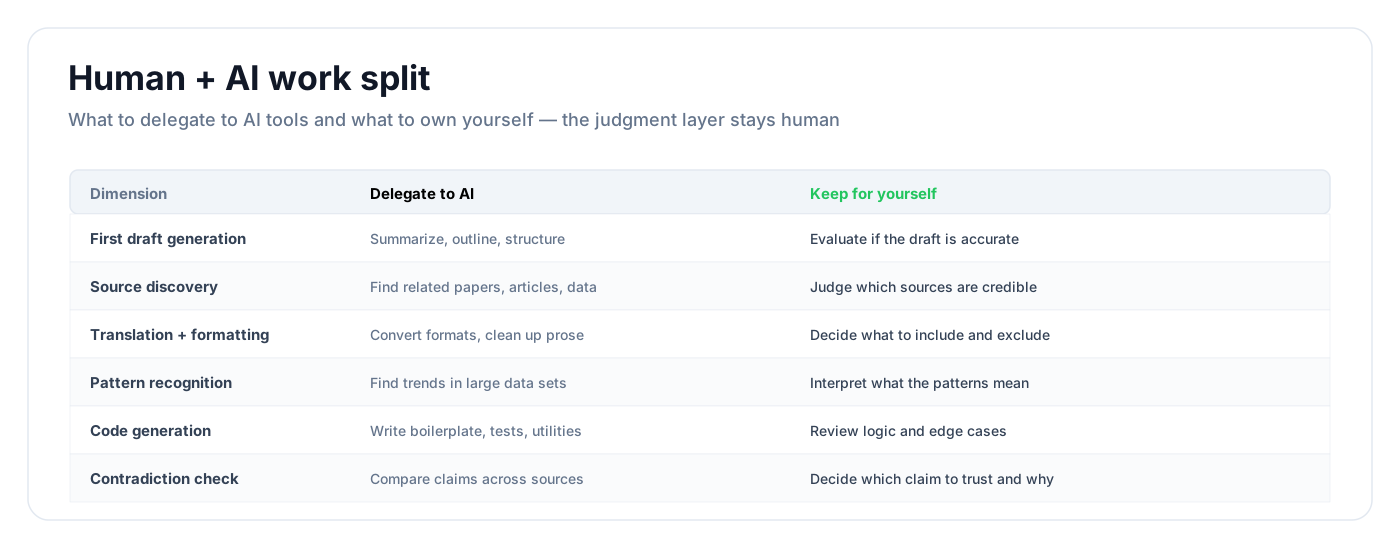
In a human + AI workflow, the early phases carry more weight than ever.
Breakdown asks:
- what is the actual task?
- what matters most?
- what is the output shape?
- what is not allowed to drift?
Assess asks:
- should AI be used here?
- what context does it need?
- what risks are introduced by accepting a suggestion too quickly?
- what must be independently checked?
That is why BASIC is so useful in modern interviews. It forces judgment before acceleration.
Structure makes collaboration legible
AI can help with code, notes, and draft explanations.
But the interviewer still needs to know whether you understand the architecture of the answer.
Structure is the bridge:
- what is the plan?
- what is the invariant?
- what components matter?
- what would success look like?
If you cannot state the structure clearly, fast implementation is not very impressive.
Implement changes shape, not importance
Implementation may now include:
- writing code yourself
- editing generated code
- evaluating generated designs
- using AI to summarize a code path
- using AI to compare alternatives
BASIC does not care whether the draft came from you alone or from a tool.
It cares whether the execution is governed by a visible plan and whether the answer survives checking.
Check becomes non-negotiable
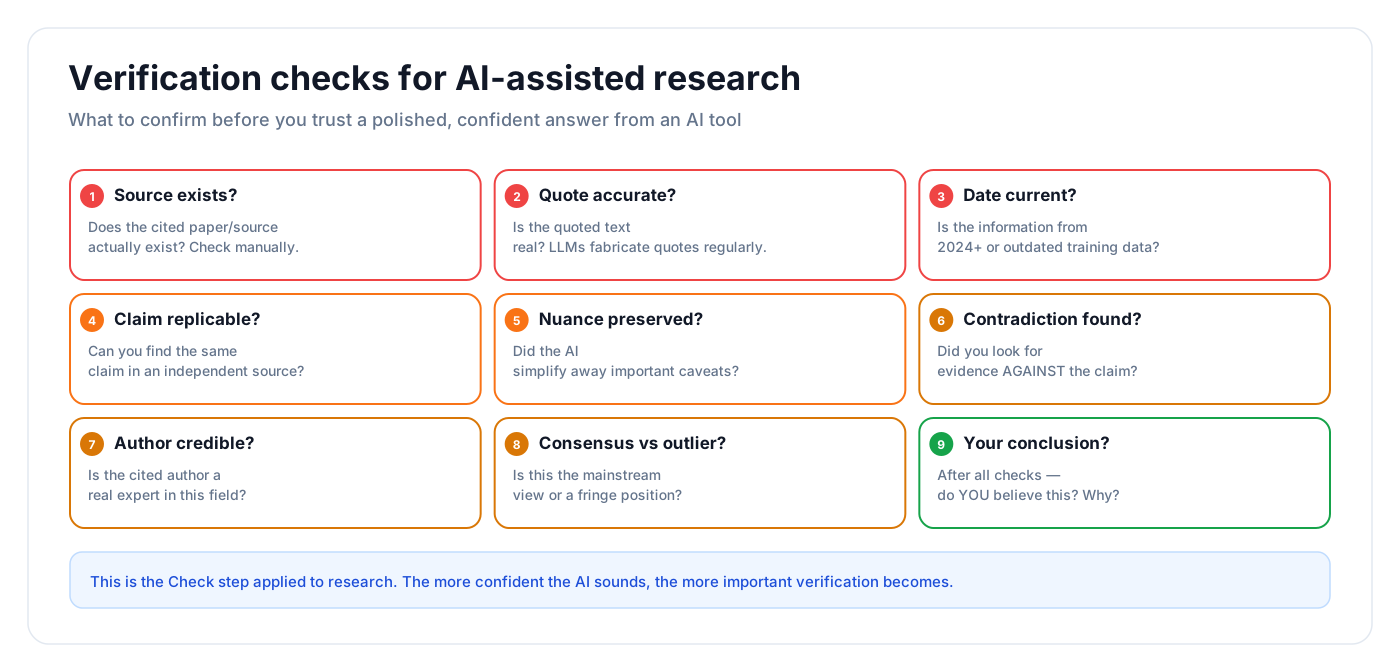
In AI-enabled workflows, Check is where trust is earned.
You need to show that you can:
- identify bad suggestions
- test generated code
- reject shallow reasoning
- correct for context the model missed
- keep the final answer inside system constraints
That is one of the clearest reasons BASIC still matters.
The operating principle
AI can accelerate construction. BASIC keeps judgment in charge of construction.
That is the important line.
The strongest candidates in human + AI environments are not the ones who generate the most.
They are the ones who can scope, evaluate, direct, and verify what gets generated.
BASIC is a strong framework for that because it was never only about typing.
It was about ordered reasoning all along.