What BASIC is and how to use it
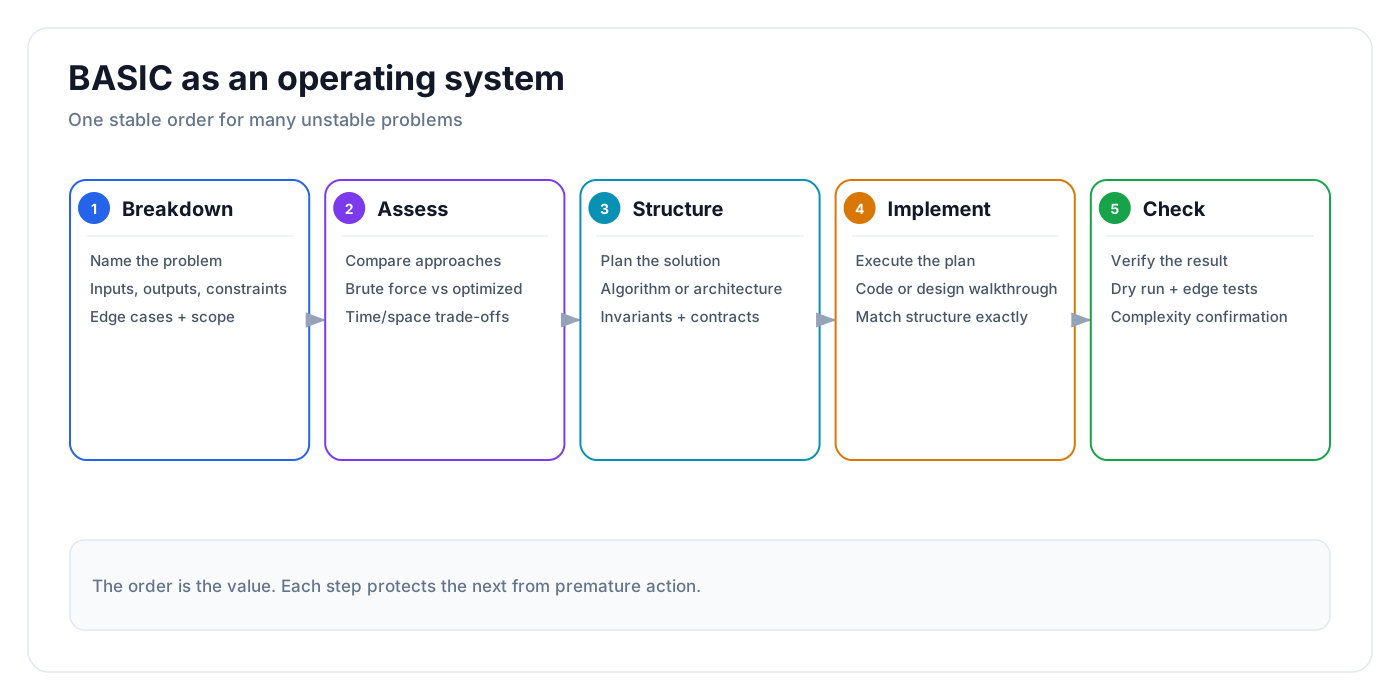
BASIC stands for Breakdown, Assess, Structure, Implement, Check.
It is not meant to sound clever. It is meant to keep your work in the right order.
That matters because most hard interview and research tasks are not failed by total ignorance. They are failed by sequence collapse. People code before they clarify. They design before they decide priorities. They summarize before they compare sources. They tell a story before they identify the actual decision that mattered.
BASIC fixes that by giving each mode of thinking its own phase.
The five moves
Breakdown
Name the problem before trying to solve it.
In coding, that means the prompt, the input and output shape, edge cases, and the likely subproblem split.
In system design, that means functional requirements, non-functional priorities, assumptions, and scope boundaries.
In behavioral prep, that means choosing the right story and identifying the decision inside it.
In research, that means identifying the exact question, unknowns, and what evidence would actually count.
Assess
Compare options before committing.
This is the moment for brute force, trade-offs, risk, scale, source quality, and hidden constraints.
Assess is where BASIC starts feeling different from generic “think out loud” advice. It creates a formal place for evaluation.
Structure
Turn reasoning into a visible shape.
For coding, that is the algorithm or invariant.
For system design, it is the architecture, request flow, API, and data model.
For behavioral answers, it is the arc of the example.
For research, it is the plan, source buckets, and synthesis format.
Implement
Execute the plan you just explained.
Write the code. Walk the architecture. Deliver the story. Produce the report.
Do not secretly switch models halfway through. Implementation should match the structure you committed to.
Check
Validate before the other person has to.
Dry run. Edge cases. Complexity. Failure modes. Source verification. Missing assumptions. Alternative paths.
BASIC earns trust because it ends in verification instead of performance theater.
The simplest way to start
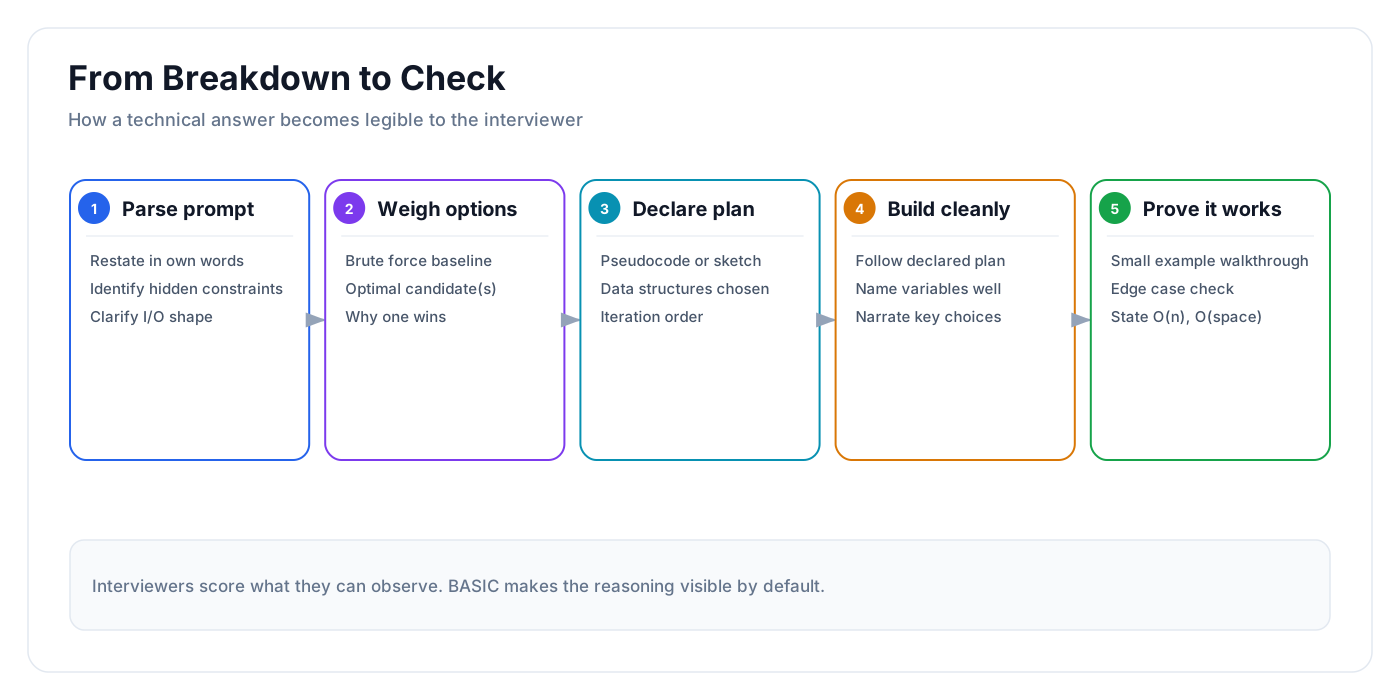
If you are new to BASIC, do not try to master all five steps perfectly at once. Start with one sentence per phase.
- Breakdown: “Here is what the problem is actually asking.”
- Assess: “Here are the main options and why one looks better.”
- Structure: “Here is the plan.”
- Implement: “I’ll build that plan in this order.”
- Check: “Here is how I know it holds.”
That one-sentence version is already better than rushing straight into execution.
Where BASIC is strongest
BASIC is especially strong when the work is:
- ambiguous
- time-boxed
- technical
- multi-step
- easy to derail with premature action
- scored by observable reasoning
That is why it fits software engineering interviews so well. It also fits AI-assisted research because modern research work is now multi-source, tool-assisted, and prone to drift unless the question, plan, and verification steps are explicit.
What BASIC is not
BASIC is not:
- a substitute for actual knowledge
- a guarantee that your first answer is optimal
- a rule that you must sound robotic
- a replacement for STAR on behavioral questions
It is a control system.
The value is not the acronym. The value is the order.
A good default
If you only remember one line, remember this one:
Use BASIC when the task is live, technical, ambiguous, or judgment-heavy.
That single rule covers coding, debugging, architecture discussion, system design, AI-assisted research, and most follow-up questions that require live reasoning.