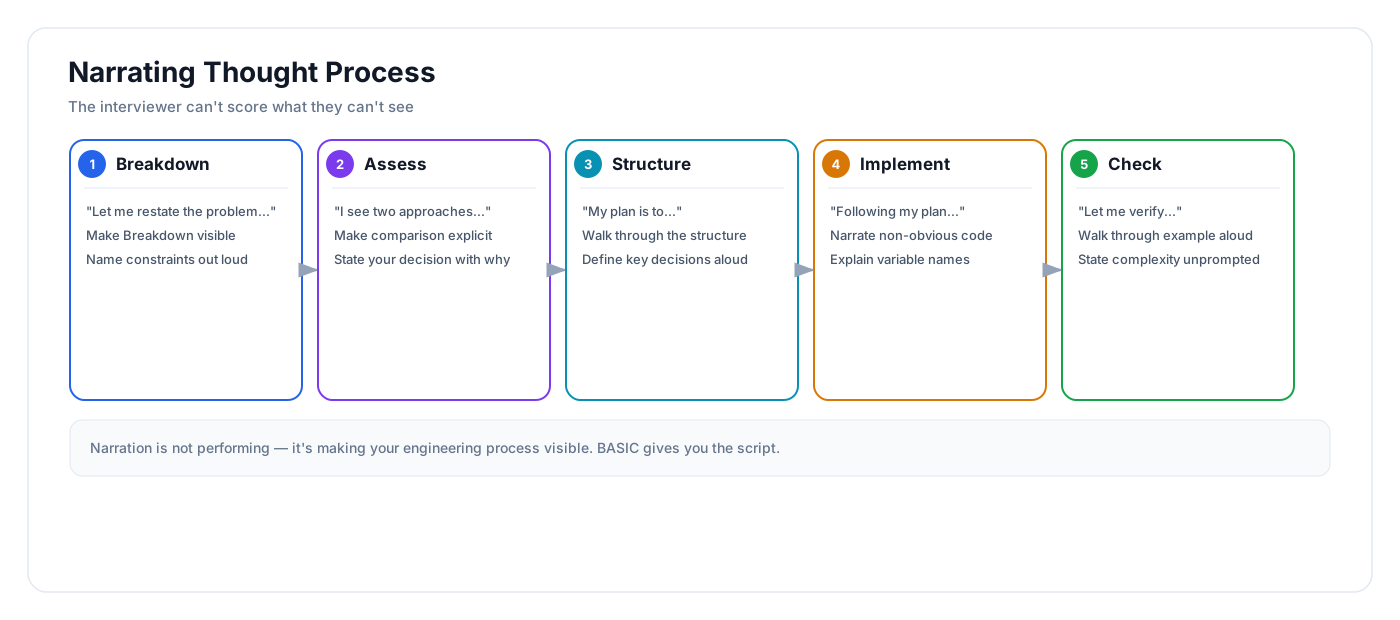
Execution Card 468 — Narrating Thought Process / Structure
Situation
The interviewer can only evaluate the reasoning they can see. The risk is straightforward: Silence looks like confusion, but nonstop narration can be just as unhelpful if it never reveals decision points.
Why the Structure step matters here
At this moment, BASIC asks you to externalize a plan, invariant, or architecture. That matters because interview performance is often lost not to lack of knowledge, but to loss of sequence.
BASIC move
In this situation, the best move is to make the plan visible before full execution. Use the stage question as a control prompt: What is the sequence, helper structure, invariant, or component map that will carry the solution? That keeps the interview from becoming reactive.
Practice script
“In the narrating thought process moment, I am at the Structure stage, so my next job is to make the plan visible before full execution, not to skip ahead.”
Failure pattern
When candidates ignore this stage, they often create the very confusion they were hoping to avoid. BASIC works here because it converts an emotional moment into a procedural one.