Execution Card 457 — Opening the Problem / Assess
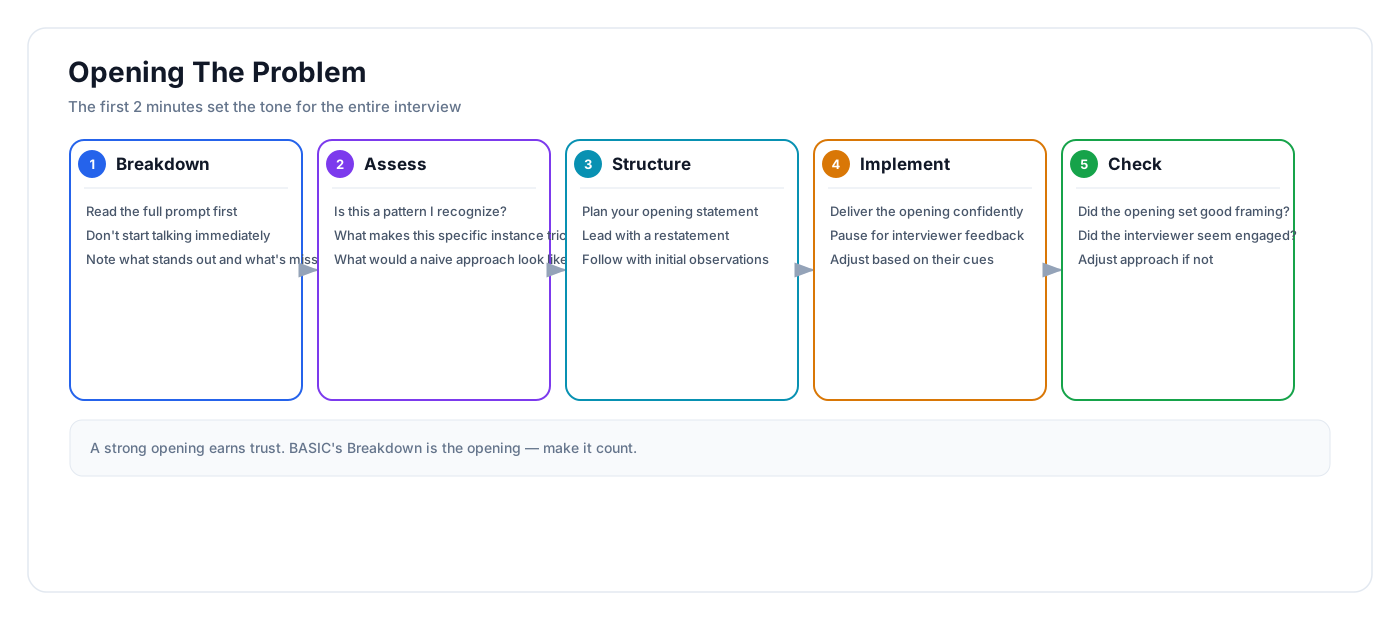
Situation
The first minute of an interview determines whether the rest of your answer feels controlled or improvised. The risk is straightforward: If you rush straight into solution mode, you may lock onto the wrong version of the problem.
Why the Assess step matters here
At this moment, BASIC asks you to evaluate candidate directions and constraints. That matters because interview performance is often lost not to lack of knowledge, but to loss of sequence.
BASIC move
In this situation, the best move is to compare plausible approaches before committing. Use the stage question as a control prompt: What approaches are available, what trade-offs matter, and what complexity target is realistic? That keeps the interview from becoming reactive.
Practice script
“In the opening the problem moment, I am at the Assess stage, so my next job is to compare plausible approaches before committing, not to skip ahead.”
Failure pattern
When candidates ignore this stage, they often create the very confusion they were hoping to avoid. BASIC works here because it converts an emotional moment into a procedural one.