Execution Card 466 — Narrating Thought Process / Breakdown
Situation
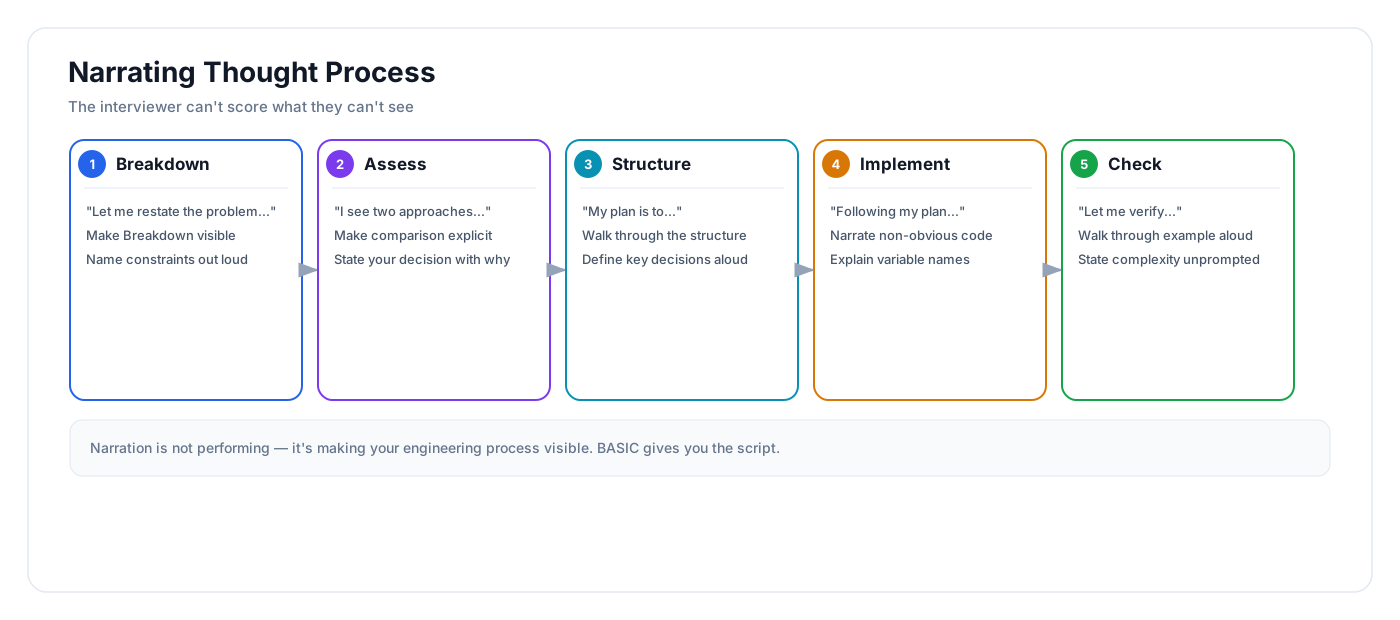
The interviewer can only evaluate the reasoning they can see. The risk is straightforward: Silence looks like confusion, but nonstop narration can be just as unhelpful if it never reveals decision points.
Why the Breakdown step matters here
At this moment, BASIC asks you to decompose the prompt into named parts. That matters because interview performance is often lost not to lack of knowledge, but to loss of sequence.
BASIC move
In this situation, the best move is to split the problem before trying to solve it. Use the stage question as a control prompt: What exactly is the problem asking, what are the constraints, and what is the shape of the input and output? That keeps the interview from becoming reactive.
Practice script
“In the narrating thought process moment, I am at the Breakdown stage, so my next job is to split the problem before trying to solve it, not to skip ahead.”
Failure pattern
When candidates ignore this stage, they often create the very confusion they were hoping to avoid. BASIC works here because it converts an emotional moment into a procedural one.