System Design Card 452 — Resilience and Disaster Recovery / Assess
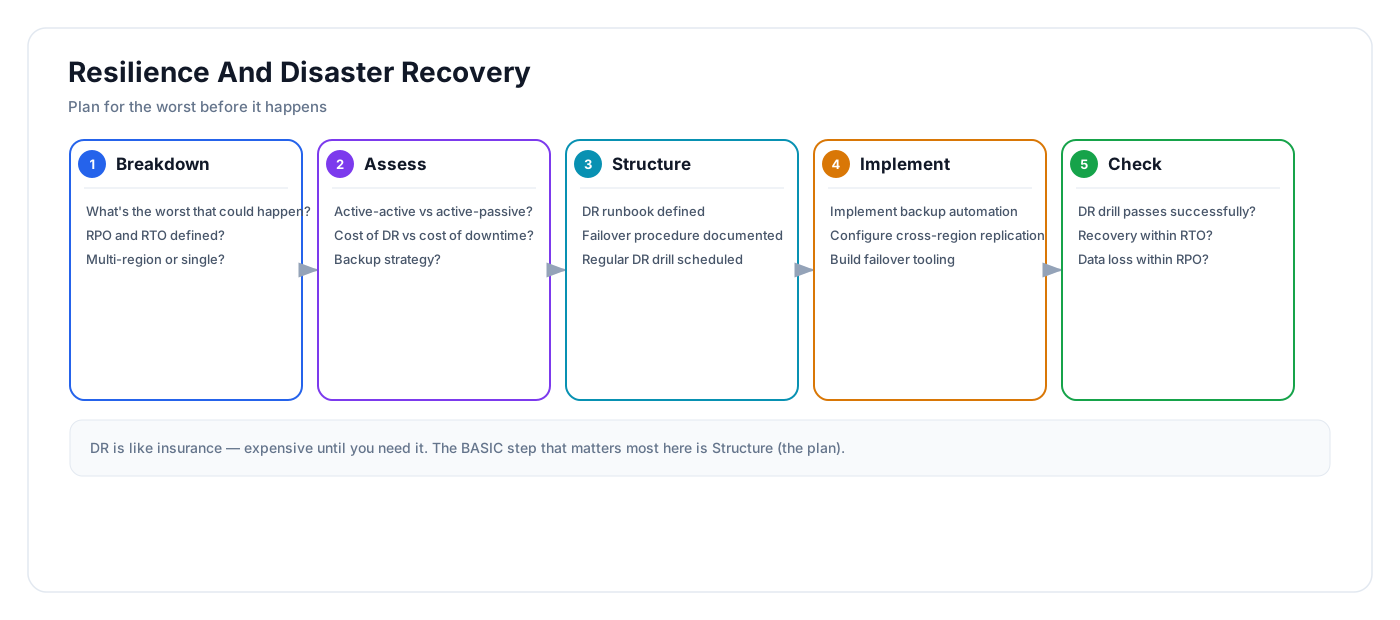
Concern
Resilience asks how the system degrades, recovers, and protects data when parts of it fail badly. Backup strategy, regional failover, replay, dead-letter handling, and controlled degradation all matter here.
What Assess means for this concern
In BASIC, the Assess step is where you identify the main architectural pressures and choose which trade-offs are actually important. For Resilience and Disaster Recovery, that means the candidate should make this concern visible at the right moment instead of bolting it on at the end.
Design move
A good move is to compare plausible approaches before committing. Tie the concern back to the user flow, the workload, and the dominant trade-off. That keeps the design grounded and makes it easier for the interviewer to follow why a cache, queue, replica, partition, or rate limiter is actually necessary.
Common miss
The miss is assuming that ordinary redundancy automatically solves major fault scenarios. BASIC helps because the staged flow keeps this concern proportional to the prompt and connected to the rest of the architecture.
BASIC prompt
“When I reach the Assess stage, how does Resilience and Disaster Recovery change the architecture, the trade-offs, or the review checklist?”