System Design Card 421 — Replication and Failover / Breakdown
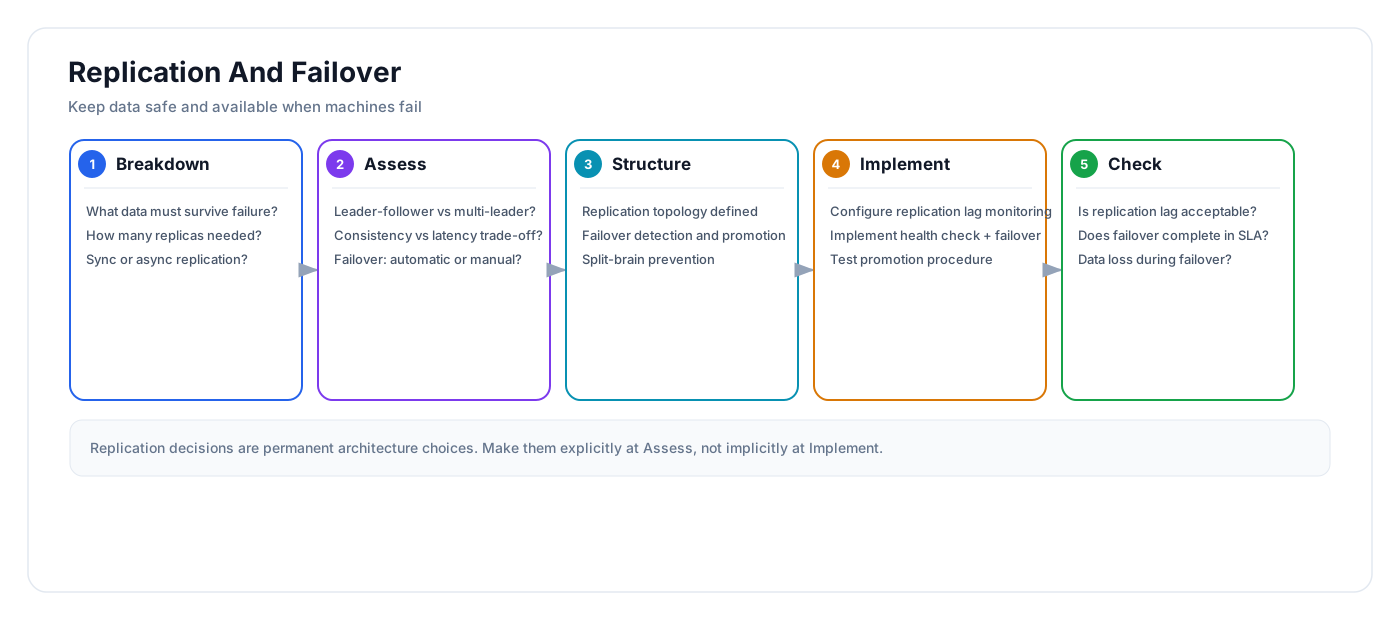
Concern
Replication improves durability and availability, but it changes write paths, read semantics, and operational complexity. Primary-replica databases, leader election, or multi-region copies all solve different failure models.
What Breakdown means for this concern
In BASIC, the Breakdown step is where you clarify the product goal, workload shape, and non-functional requirement that will dominate the design. For Replication and Failover, that means the candidate should make this concern visible at the right moment instead of bolting it on at the end.
Design move
A good move is to split the problem before trying to solve it. Tie the concern back to the user flow, the workload, and the dominant trade-off. That keeps the design grounded and makes it easier for the interviewer to follow why a cache, queue, replica, partition, or rate limiter is actually necessary.
Common miss
The miss is saying 'replicate it' without addressing lag, failover timing, or write ownership. BASIC helps because the staged flow keeps this concern proportional to the prompt and connected to the rest of the architecture.
BASIC prompt
“When I reach the Breakdown stage, how does Replication and Failover change the architecture, the trade-offs, or the review checklist?”