System Design Card 418 — Sharding and Partitioning / Structure
Concern
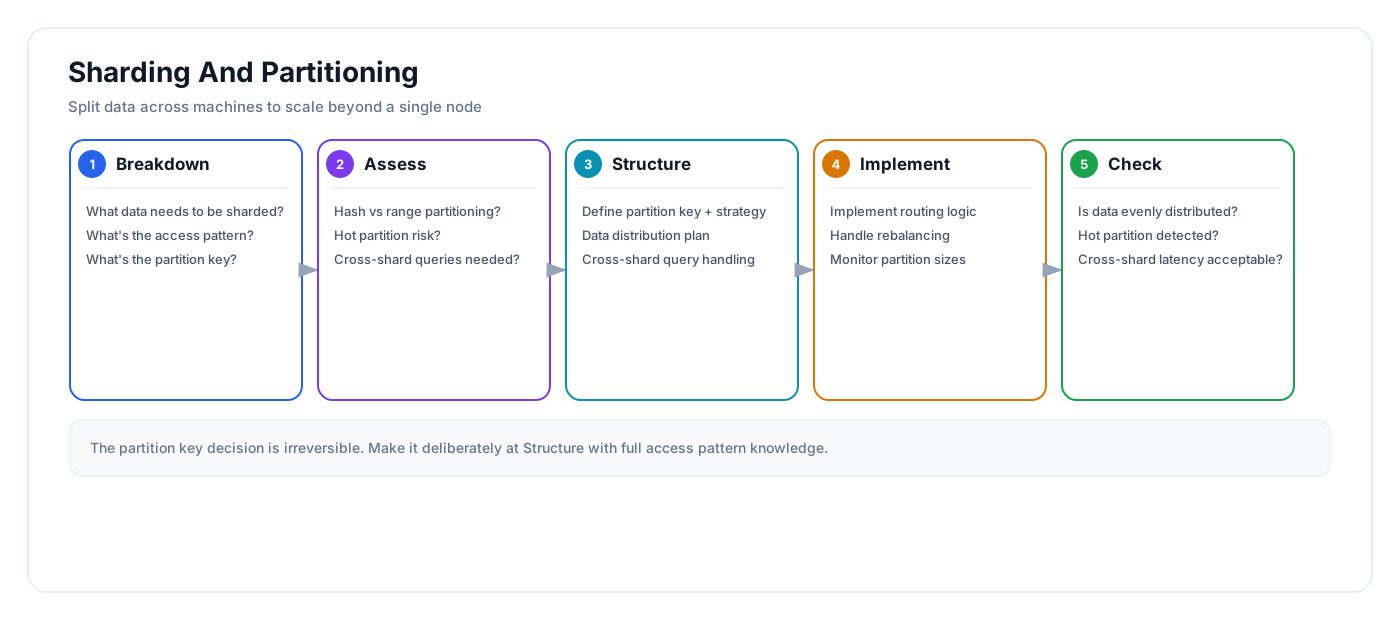
Partitioning changes how data and load scale, but it also introduces hotspots, rebalancing, and cross-partition complexity. User ID, tenant ID, or content ID may all be candidate partition keys depending on the workload.
What Structure means for this concern
In BASIC, the Structure step is where you turn the chosen trade-offs into a clear high-level architecture and request flow. For Sharding and Partitioning, that means the candidate should make this concern visible at the right moment instead of bolting it on at the end.
Design move
A good move is to make the plan visible before full execution. Tie the concern back to the user flow, the workload, and the dominant trade-off. That keeps the design grounded and makes it easier for the interviewer to follow why a cache, queue, replica, partition, or rate limiter is actually necessary.
Common miss
The miss is announcing sharding before identifying the access pattern or hotspot risk. BASIC helps because the staged flow keeps this concern proportional to the prompt and connected to the rest of the architecture.
BASIC prompt
“When I reach the Structure stage, how does Sharding and Partitioning change the architecture, the trade-offs, or the review checklist?”