System Design Card 398 — Load Balancing / Structure
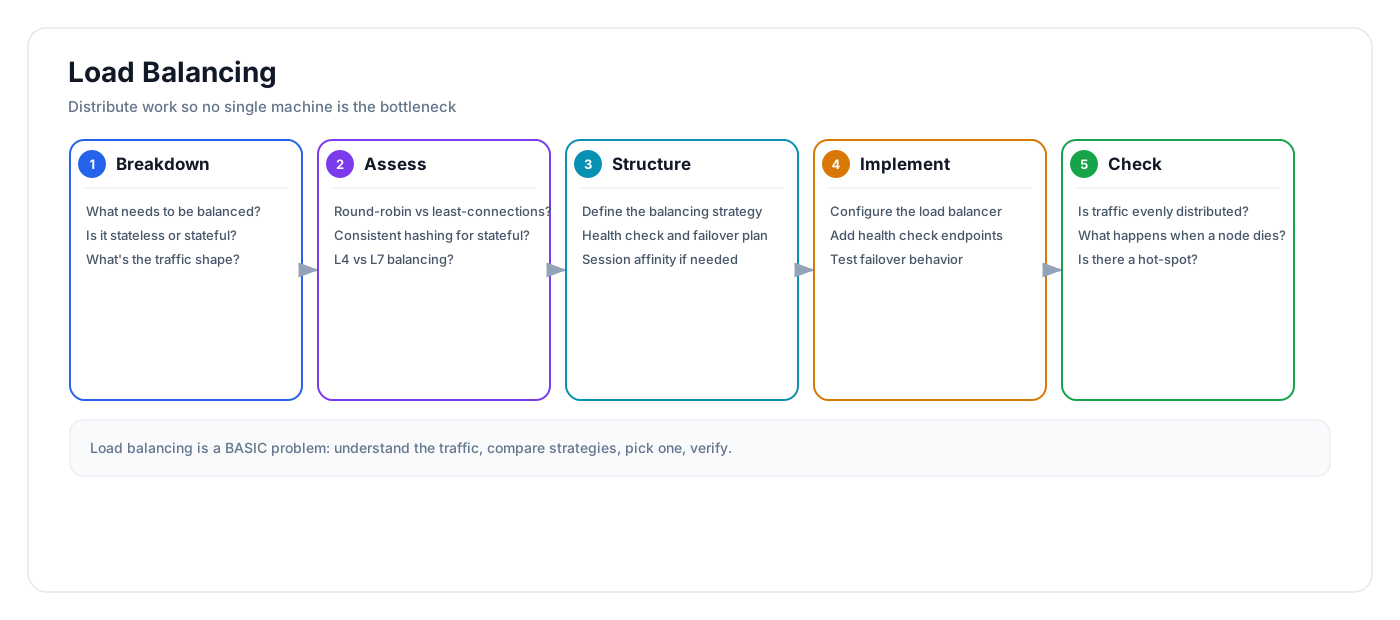
Concern
Load balancing keeps request distribution, horizontal scaling, and failure handling tractable. Ingress traffic to stateless API nodes usually scales better when the node pool can be expanded behind a balancer.
What Structure means for this concern
In BASIC, the Structure step is where you turn the chosen trade-offs into a clear high-level architecture and request flow. For Load Balancing, that means the candidate should make this concern visible at the right moment instead of bolting it on at the end.
Design move
A good move is to make the plan visible before full execution. Tie the concern back to the user flow, the workload, and the dominant trade-off. That keeps the design grounded and makes it easier for the interviewer to follow why a cache, queue, replica, partition, or rate limiter is actually necessary.
Common miss
The miss is assuming horizontal scale without explaining how work is actually distributed. BASIC helps because the staged flow keeps this concern proportional to the prompt and connected to the rest of the architecture.
BASIC prompt
“When I reach the Structure stage, how does Load Balancing change the architecture, the trade-offs, or the review checklist?”