LeetCode Card 242 — Queue and Deque / Assess
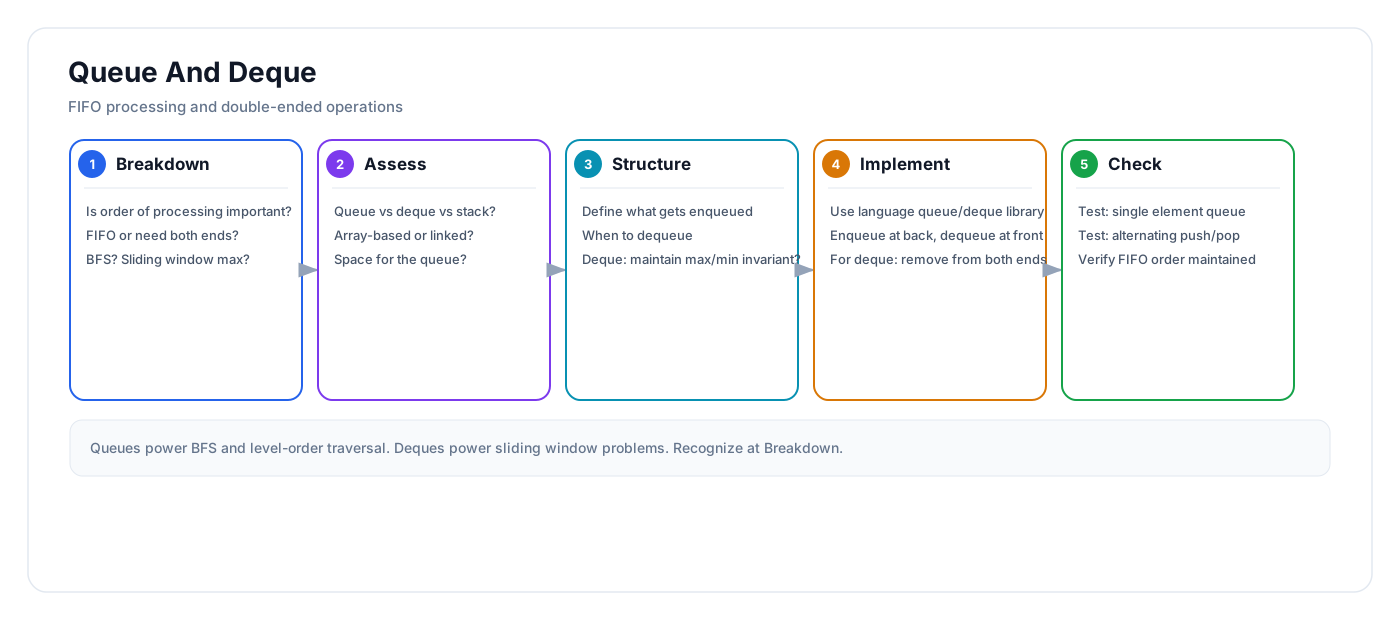
Pattern signal
This pattern usually appears when the prompt involves level-order processing, FIFO workflows, or windows where both ends matter. Binary Tree Level Order Traversal, moving-average windows, and monotonic deque problems are common examples.
What Assess means here
In BASIC, the Assess step is where you compare the viable data structures or traversals and decide what complexity target fits. For Queue and Deque, that matters because the pattern only becomes useful once the candidate is explicit about what is being tracked, reduced, or preserved.
Interview move
A strong move is to compare plausible approaches before committing. In this pattern family, say out loud what representation makes the problem easier: the map entry, the pointer invariant, the recursion contract, the queue contents, or the DP state. That keeps the implementation attached to a reason.
Common miss
The miss is using the right container for the wrong access pattern or forgetting what gets evicted and why. BASIC reduces that risk because the stage sequence forces you to earn the implementation instead of jumping straight into it.
BASIC prompt
“Given that this looks like Queue and Deque, what is the simplest way to compare the viable data structures or traversals and decide what complexity target fits?”