Comparison Card 166 — Reliability and Failure Modes / Breakdown
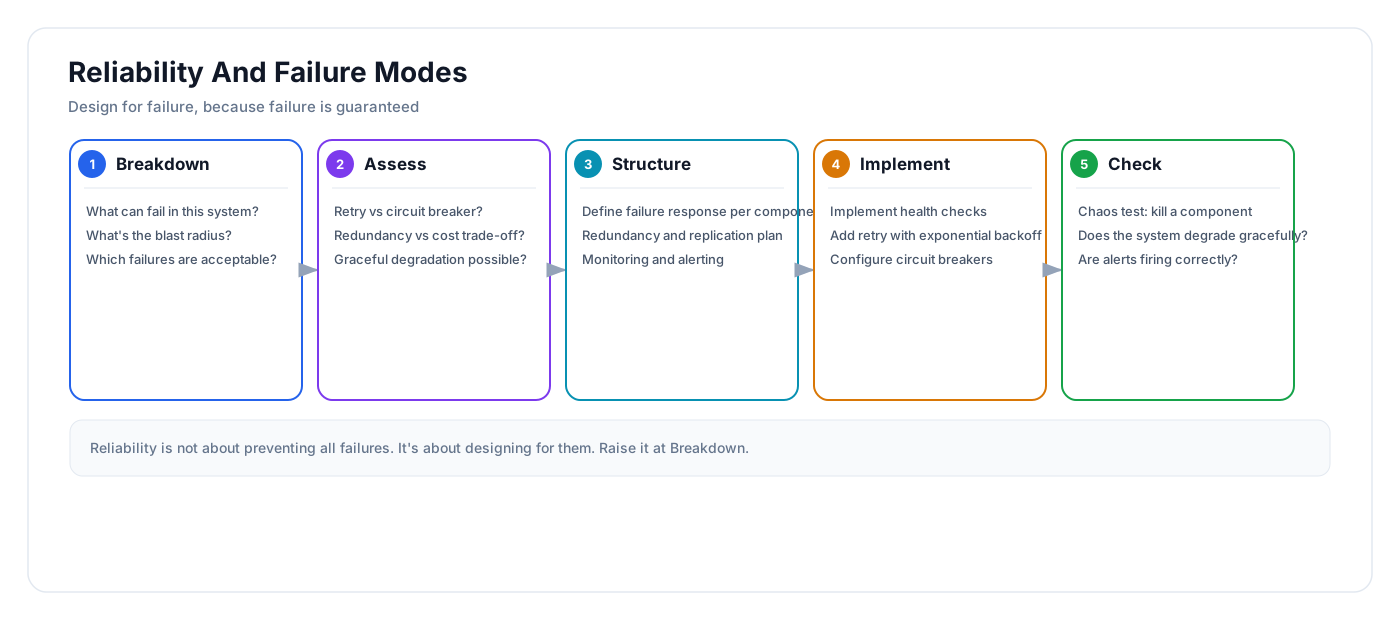
Situation
Reliability-focused rounds test whether the candidate thinks beyond the happy path. In this setting, the active interview task is happening now, not in the past.
Why BASIC fits better here
During Breakdown, BASIC asks the candidate to decompose the prompt into named parts. The Check stage naturally surfaces retries, backpressure, fallbacks, and observability. That matches the live technical work of the round, because the interviewer is evaluating present-tense reasoning, not only narrative polish.
What goes wrong with a STAR-shaped response
STAR has no built-in verification or failure-review phase for a live system prompt. If a candidate leans too hard on a story-shaped answer in this moment, they may sound organized while still leaving the technical core underdeveloped.
What the interviewer is really seeing
Strong candidates proactively examine what happens when dependencies misbehave or traffic changes sharply. The BASIC move at this stage is to split the problem before trying to solve it. That gives the interviewer concrete evidence that the candidate can think, choose, build, and verify under pressure.
Practical script
“In this reliability and failure modes situation, I’m using the Breakdown step to split the problem before trying to solve it. The main question I need to answer is: What exactly is the problem asking, what are the constraints, and what is the shape of the input and output?”