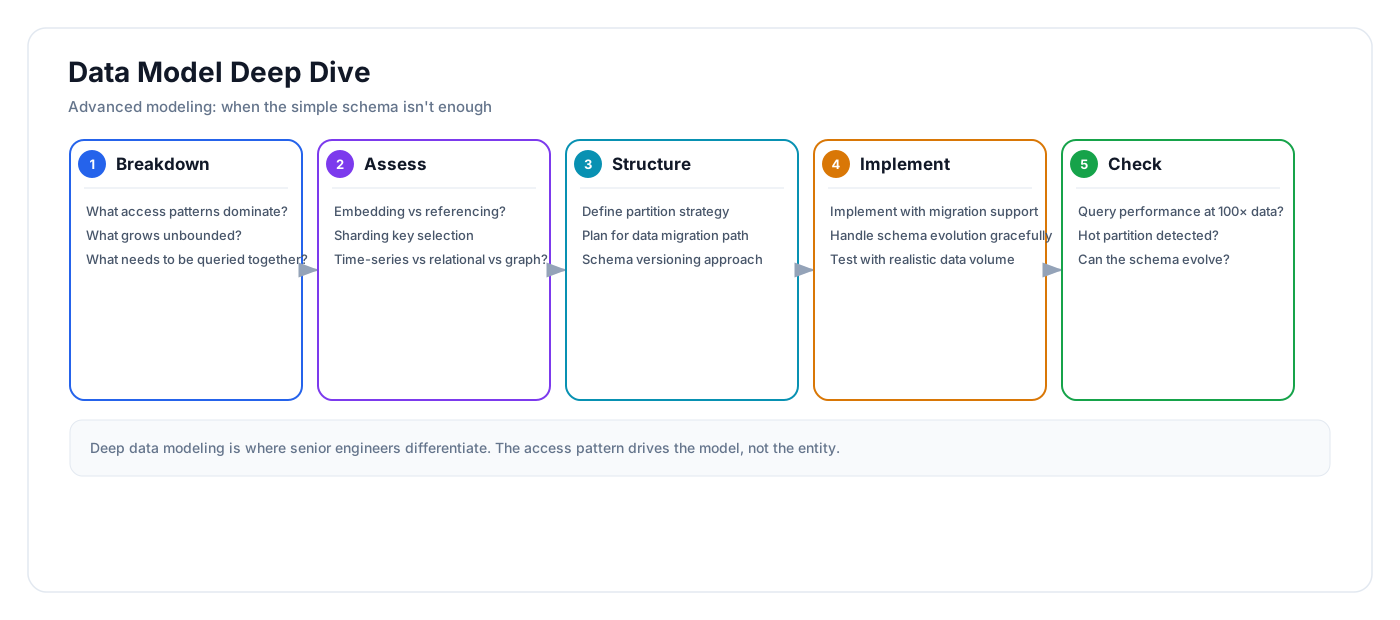
Comparison Card 159 — Data Model Deep Dive / Implement
Situation
A data-model interview tests whether entities, relationships, and access patterns line up. In this setting, the active interview task is happening now, not in the past.
Why BASIC fits better here
During Implement, BASIC asks the candidate to execute the chosen plan in controlled order. BASIC helps candidates define requirements and read/write patterns before they lock in schemas. That matches the live technical work of the round, because the interviewer is evaluating present-tense reasoning, not only narrative polish.
What goes wrong with a STAR-shaped response
Past-project storytelling cannot substitute for current modeling logic. If a candidate leans too hard on a story-shaped answer in this moment, they may sound organized while still leaving the technical core underdeveloped.
What the interviewer is really seeing
The signal is a model that fits the access pattern and a review of integrity and scaling concerns. The BASIC move at this stage is to transcribe the plan instead of improvising. That gives the interviewer concrete evidence that the candidate can think, choose, build, and verify under pressure.
Practical script
“In this data model deep dive situation, I’m using the Implement step to transcribe the plan instead of improvising. The main question I need to answer is: How do we write or walk through the solution one stable layer at a time?”