Comparison Card 117 — Coding Hard / Assess
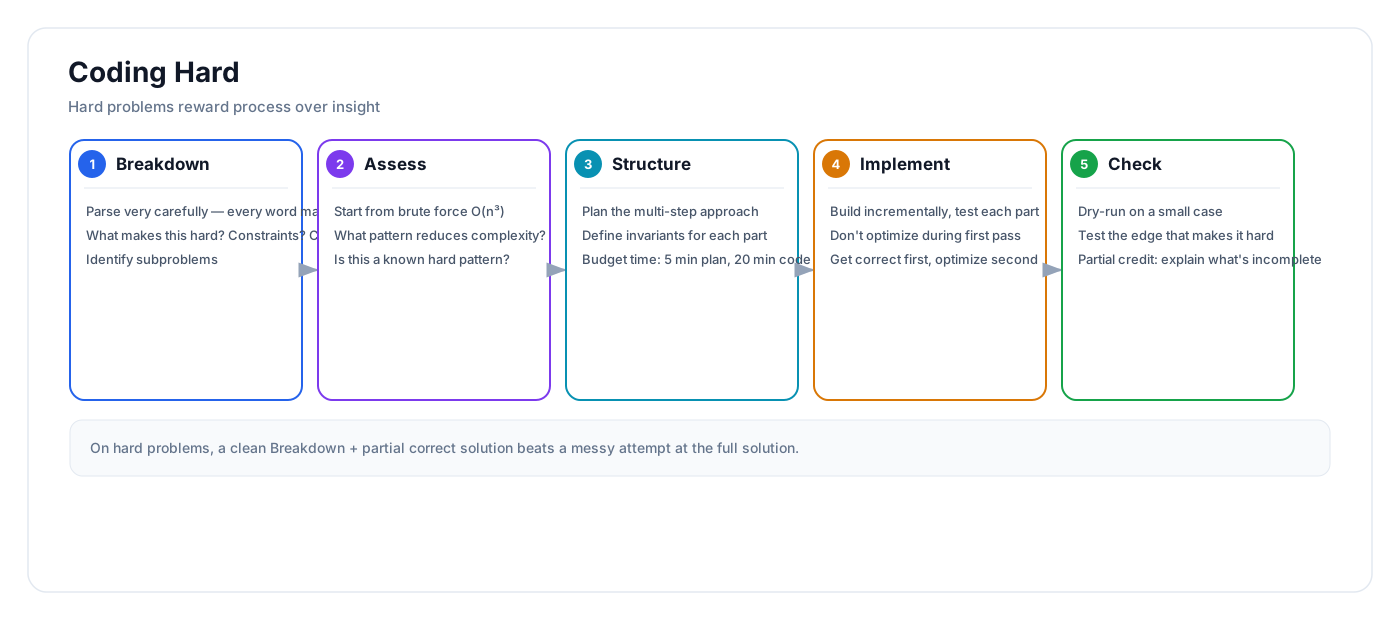
Situation
Hard problems create branching possibilities, partial progress, and pressure spikes. In this setting, the active interview task is happening now, not in the past.
Why BASIC fits better here
During Assess, BASIC asks the candidate to evaluate candidate directions and constraints. A staged problem-solving framework preserves momentum when you cannot see the full solution immediately. That matches the live technical work of the round, because the interviewer is evaluating present-tense reasoning, not only narrative polish.
What goes wrong with a STAR-shaped response
STAR can make a candidate sound organized while still leaving the real technical problem unsolved. If a candidate leans too hard on a story-shaped answer in this moment, they may sound organized while still leaving the technical core underdeveloped.
What the interviewer is really seeing
Interviewers care whether you can break the challenge down and recover intelligently from uncertainty. The BASIC move at this stage is to compare plausible approaches before committing. That gives the interviewer concrete evidence that the candidate can think, choose, build, and verify under pressure.
Practical script
“In this coding hard situation, I’m using the Assess step to compare plausible approaches before committing. The main question I need to answer is: What approaches are available, what trade-offs matter, and what complexity target is realistic?”