Comparison Card 111 — Coding Medium / Breakdown
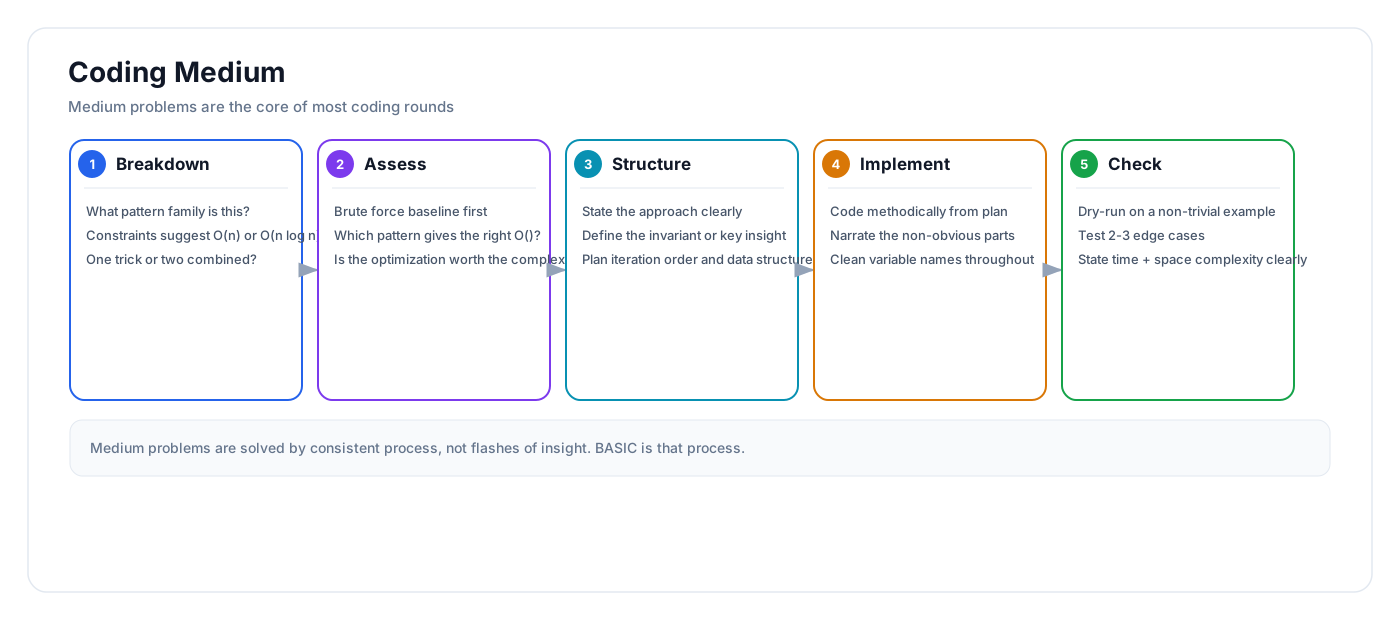
Situation
A medium-difficulty problem often has multiple plausible approaches and enough edge cases to punish improvisation. In this setting, the active interview task is happening now, not in the past.
Why BASIC fits better here
During Breakdown, BASIC asks the candidate to decompose the prompt into named parts. BASIC fits because the round is about choosing and defending a current algorithm, not about recounting a past experience. That matches the live technical work of the round, because the interviewer is evaluating present-tense reasoning, not only narrative polish.
What goes wrong with a STAR-shaped response
STAR offers a neat narrative arc, but it does not tell you how to compare a hash map approach to a two-pointer approach on the spot. If a candidate leans too hard on a story-shaped answer in this moment, they may sound organized while still leaving the technical core underdeveloped.
What the interviewer is really seeing
Scoring usually reflects understanding, trade-offs, implementation quality, and testing. The BASIC move at this stage is to split the problem before trying to solve it. That gives the interviewer concrete evidence that the candidate can think, choose, build, and verify under pressure.
Practical script
“In this coding medium situation, I’m using the Breakdown step to split the problem before trying to solve it. The main question I need to answer is: What exactly is the problem asking, what are the constraints, and what is the shape of the input and output?”