Theory Card 081 — Communication Under Pressure / Breakdown
Research lens
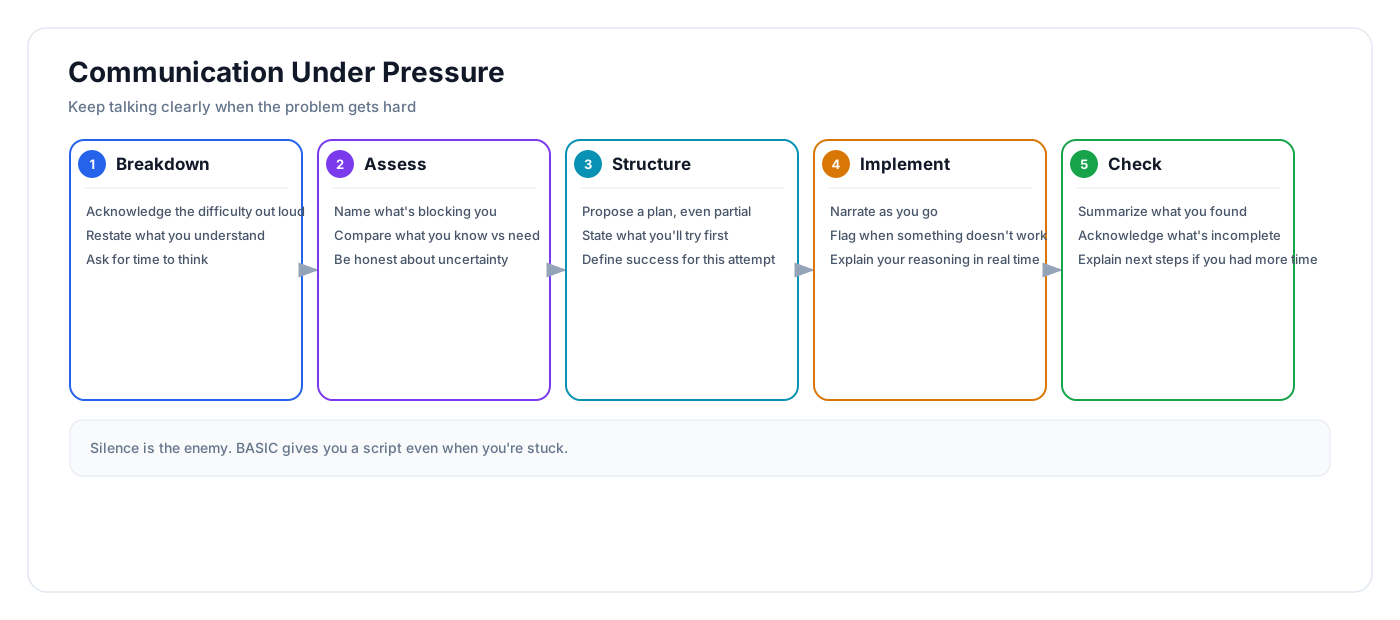
Pressure changes how people speak; they often either shut down or overshare in a way that hides the important signal. In the Breakdown stage of BASIC, the goal is to decompose the prompt into named parts. That makes this concept especially relevant here, because it shapes how much mental work the candidate is trying to carry at once and what gets made explicit.
Why it matters in SWE interviews
Technical interviews reward concise, structured reasoning more than theatrical confidence. Because BASIC gives a sequence, it also gives a sequence for speaking: define, compare, plan, execute, review. In practice, Breakdown is where the candidate should ask: What exactly is the problem asking, what are the constraints, and what is the shape of the input and output? That question acts like a cognitive boundary. It protects the answer from turning into an unstructured search.
BASIC move
A strong move here is to split the problem before trying to solve it. For Communication Under Pressure, that means deliberately naming the important units instead of juggling them implicitly. The interviewer sees cleaner reasoning, and the candidate benefits from prevents premature solutioning and keeps working memory from being flooded too early.
Common miss
The miss is believing that more words automatically produce more clarity. When that happens, the candidate usually feels busy, but the answer is actually becoming less inspectable.
Practice prompt
“While practicing, pause at the Breakdown step and explain how Communication Under Pressure changes the way you would handle the prompt.”