Theory Card 068 — Mental Simulation / Structure
Research lens
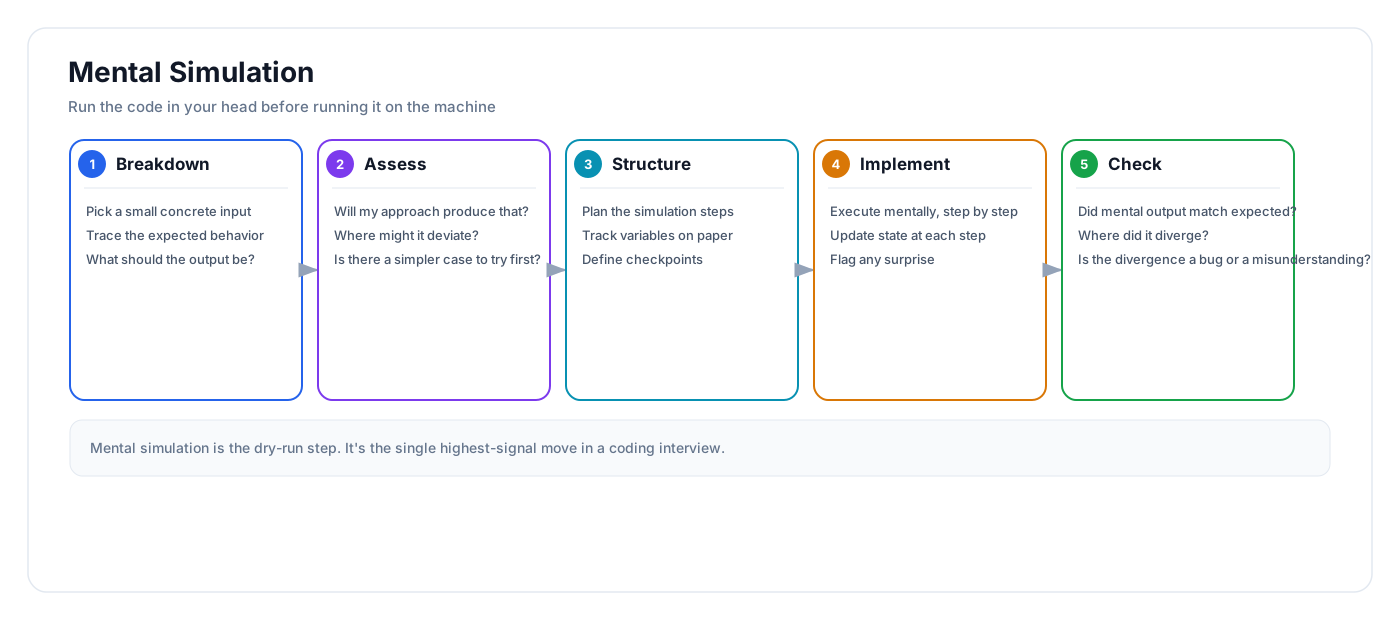
Mental simulation is the ability to run the solution in your head or on paper before trusting it. In the Structure stage of BASIC, the goal is to externalize a plan, invariant, or architecture. That makes this concept especially relevant here, because it shapes how much mental work the candidate is trying to carry at once and what gets made explicit.
Why it matters in SWE interviews
Good candidates dry-run recursion, pointer movement, queue flow, and failure paths instead of waiting for bugs to reveal themselves. Check formalizes mental simulation so it happens consistently instead of only when time happens to remain. In practice, Structure is where the candidate should ask: What is the sequence, helper structure, invariant, or component map that will carry the solution? That question acts like a cognitive boundary. It protects the answer from turning into an unstructured search.
BASIC move
A strong move here is to make the plan visible before full execution. For Mental Simulation, that means deliberately naming the important units instead of juggling them implicitly. The interviewer sees cleaner reasoning, and the candidate benefits from reduces hidden-state thinking and makes reasoning inspectable.
Common miss
The miss is assuming an answer is correct because it looks elegant. When that happens, the candidate usually feels busy, but the answer is actually becoming less inspectable.
Practice prompt
“While practicing, pause at the Structure step and explain how Mental Simulation changes the way you would handle the prompt.”