Theory Card 019 — Self-Explanation / Implement
Research lens
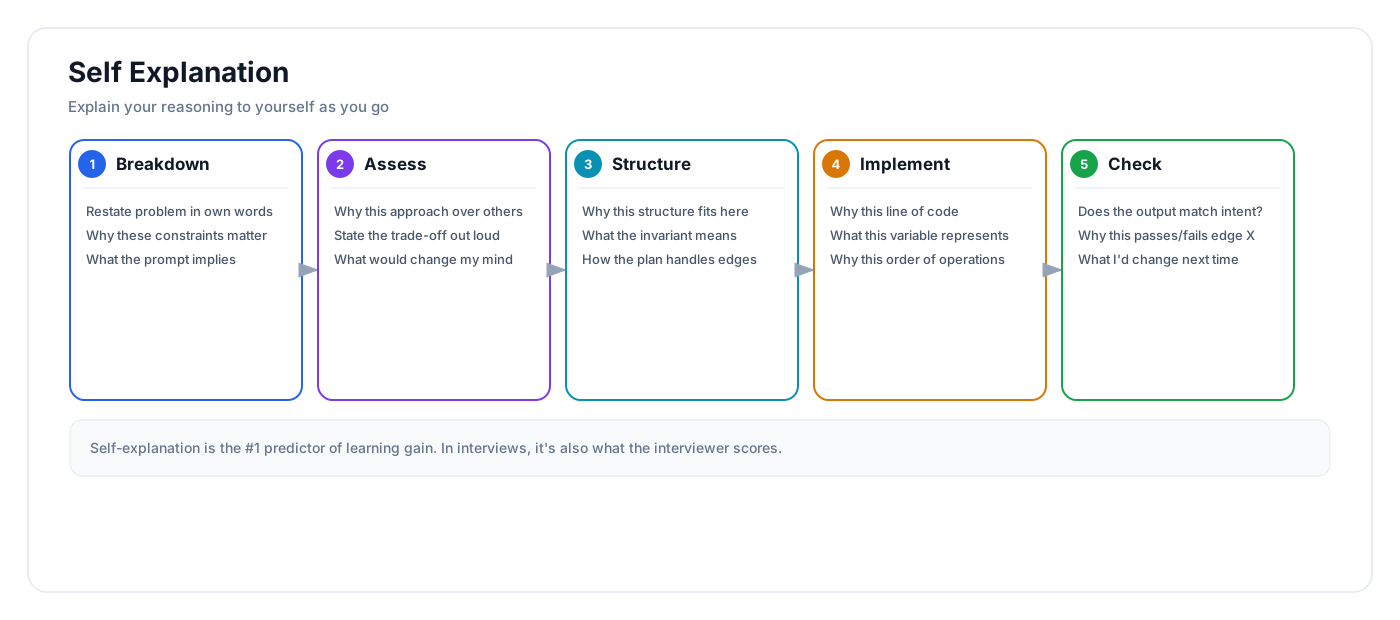
Self-explanation research shows that explaining why a step makes sense deepens understanding and improves transfer. In the Implement stage of BASIC, the goal is to execute the chosen plan in controlled order. That makes this concept especially relevant here, because it shapes how much mental work the candidate is trying to carry at once and what gets made explicit.
Why it matters in SWE interviews
Thinking aloud in an interview is most useful when it reveals causality, not when it narrates every keystroke. BASIC gives a safe structure for self-explanation: what the problem is, what options exist, what plan will be used, and how correctness is checked. In practice, Implement is where the candidate should ask: How do we write or walk through the solution one stable layer at a time? That question acts like a cognitive boundary. It protects the answer from turning into an unstructured search.
BASIC move
A strong move here is to transcribe the plan instead of improvising. For Self-Explanation, that means deliberately naming the important units instead of juggling them implicitly. The interviewer sees cleaner reasoning, and the candidate benefits from keeps execution disciplined and easier to debug.
Common miss
The common miss is either total silence or constant verbal noise that never clarifies why a decision was made. When that happens, the candidate usually feels busy, but the answer is actually becoming less inspectable.
Practice prompt
“While practicing, pause at the Implement step and explain how Self-Explanation changes the way you would handle the prompt.”